
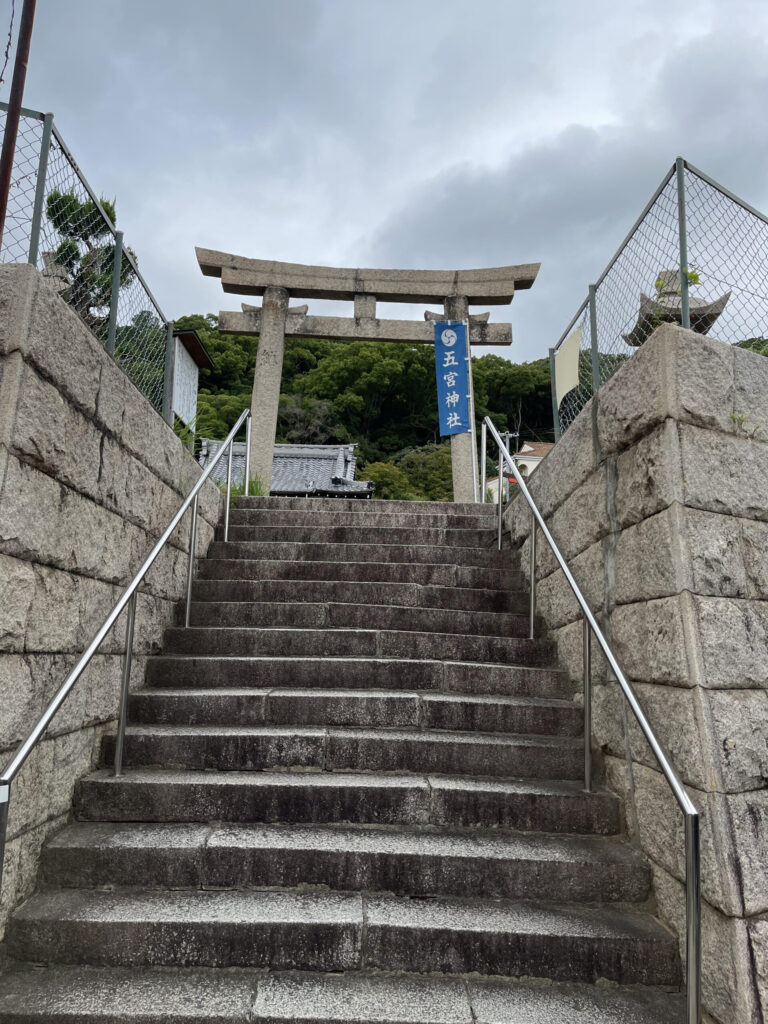
🔹Gomiya Shrine
One of the biggest attractions of the Kobe Eight Shrines pilgrimage is the “Goshuin (shrine stamp) collecting.”
Each of the eight shrines has its own unique meaning, and by collecting them, you can feel the connection between Kobe’s history and faith.
5.1 Characteristics and Design of Kobe Hachimiya Shrine’s Goshuin (Shrine Seals)
A distinctive feature of Kobe Hachimiya shrines’ goshuin is that they are stamped with the crest of each shrine or a seal symbolizing the enshrined deity.
Even within the same “Hachimiya Pilgrimage,” the font, placement of the seal, and calligraphy differ from shrine to shrine,
and when compiled into a single booklet, it becomes a beautiful collection of Kobe’s cultural art.
| Shrine Name | Features of the Goshuin | Keywords for Benefits |
| Ikuta Shrine | A powerful brushstroke of the “Ikuta Taisha” vermilion seal. Includes the seal of Wakuhime-no-Mikoto. | For matchmaking and good fortune in competitions |
| Ichinomiya Shrine | Color variations and limited-edition goshuin (shrine stamps) according to the season (cherry blossoms, etc.). | Prayers for safe navigation and matchmaking |
| Ninomiya Shrine | Sometimes, a symbol of rice stalks, a symbol of good fortune, is added. | Academic success and financial luck |
| Sannomiya Shrine | Beautiful vermilion seal with triple tomoe crest, and comes with a stamp for praying for safe travels. | Traffic Safety |
| Shinomiya Shrine | The emblem of Ichikishimahime-no-Mikoto, the goddess of performing arts. | Beauty and performing arts |
| Gomiya Shrine | The character “五” (five) is written in large ink in the center. | For business prosperity |
| Rokunomiya Shrine | The character “祓” (harai), meaning “exorcism” or “warding off evil spirits,” may be included. | Health and protection from misfortune |
| Shichinomiya Shrine | A popular symbol is the one modeled after a ship’s rudder. | Matchmaking and Navigation |
| Hachimiya Shrine | Features the divine crest representing Kumano-Hodo-Kusunoki-no-Mikoto. | Good fortune and protection from evil |
🔸Key Points:
・Collecting all the goshuin (temple/shrine stamps) signifies “fulfillment” and is considered a sign of improved luck.
・More and more people are creating “eight-shrine dedicated goshuin notebooks” to collect stamps from all eight shrines in one book.
5.2 Where can I get a goshuin notebook?
・It’s a good idea to have a goshuin notebook ready before starting your Kobe eight-shrine pilgrimage.
・The following three methods are recommended:
① Obtain at Ikuta Shrine (most common)
・As this is the starting point for the Kobe eight-shrine pilgrimage, many people purchase their goshuin notebooks here.
・Types: Original goshuin notebooks (several types including vermilion and navy blue)
・Price: Around 1,500 to 2,000 yen
② Purchase at stationery and general goods stores in Kobe
・Loft Kobe, Tokyu Hands Sannomiya, etc. carry Japanese-patterned goshuin notebooks.
・Recommended for those who prioritize design.
③ Search for “Kobe Hachimiya Goshuincho” (Kobe Eight Shrines Goshuin Stamp Book) online.
・Available for purchase on Amazon and Rakuten.
・However, purchasing it locally is more popular as a travel souvenir.
🔸Recommended Points:
・If you plan to visit all eight shrines, choosing a double-page goshuincho (40 pages or more) will give you ample space.
・Writing down the “date of pilgrimage” and “wish” on the first page will make it a more meaningful experience when you look back on it later.
5.3 Goshuin Pilgrimage Manners and Precautions
Goshuin stamps are not merely a “stamp rally,” but proof of worship (a record of prayer).
By following proper manners, you can have a more heartfelt pilgrimage.
🔸Basic Manners for Goshuin Pilgrimage
1.Always pray before receiving a goshuin stamp.
→ It is polite to go to the shrine office after paying your respects.
2.Hand over your Goshuincho (stamp book) in the correct orientation.
→ Hand it over so the cover faces the person you are assisting.
3.Offer it as a “hatsuho-ryo” (first offering) rather than a fee.
→ Generally, 500 yen is a guideline. Prepare small change to avoid needing change.
4.Keep photography and conversation to a minimum.
→ Wait quietly while your Goshuin is being stamped.
5.Do not open pages containing stamps from other shrines without permission.
→ It is important to treat it as a sacred record.
🔸Points to note:
・Some shrines may offer pre-stamped Goshuin.
・Goshuin reception hours at most shrines are around 9:00 AM to 4:30 PM. Be careful in the late afternoon.
5.4 The spiritual benefits you can gain from collecting Goshuin.
Collecting Goshuin from the eight shrines of Kobe is also a “journey connecting you with the gods.”
Each of the eight shrines is said to govern one of the “eight aspects of life’s fortune,” and it’s said that by the time you’ve collected all of them, your mind will naturally become more balanced and you’ll feel more positive.
🔸Changes you may feel as a spiritual benefit:
・Visiting the shrines fosters a sense of gratitude and reduces stress.
・Each time you look back at your goshuincho (stamp book), you feel a sense of “record of effort” and “proof of prayer.”
・Many people feel a natural “flow of good fortune,” leading to a high rate of repeat visitors.
🔸Spiritual point:
Collecting stamps from the Kobe Eight Shrines pilgrimage is not just a record; it’s a “journey to give form to the changes in your heart.”
In particular, it’s said that completing the “beginning with the first shrine” and the “end with the eighth shrine” on the same day completes the flow of your wishes.
🔸Summary:
The Kobe Eight Shrines goshuin pilgrimage is an experience akin to walking through the city of Kobe itself.
As you visit eight shrines, experience Kobe’s culture, the warmth of its people, and the blessings of the gods—record this unique “spiritual journey of Kobe” in a single goshuincho (stamp book).